Tarot History: The Surprising Truth About Tarot Cards
Published on · 9 min read
Tarot Wasn’t Always About Fortune-Telling: The Surprising History Behind the Cards
By Nishee | Tarot by Nishee
I have always found something fascinating about tarot cards.
A single card can show a mysterious figure, a beautiful starry sky, a person standing at the edge of a cliff, or a tower being struck by lightning. Every image seems to tell a story. And when we turn the cards over during a reading, we often look for a connection between those stories and our own lives.
But recently, I found myself wondering about something else.
Who decided what these cards meant in the first place? And were tarot cards always used to understand the future?
I started looking into the history of tarot, including museum collections and historical accounts. What I discovered changed the way I think about these familiar cards.
The story is older than many of us imagine, but not quite in the way popular myths suggest.
The First Surprise: Tarot Started as a Card Game
Today, most people associate tarot with spiritual guidance, personal reflection, or fortune-telling.
Historically, however, tarot cards first appeared in a very different setting.
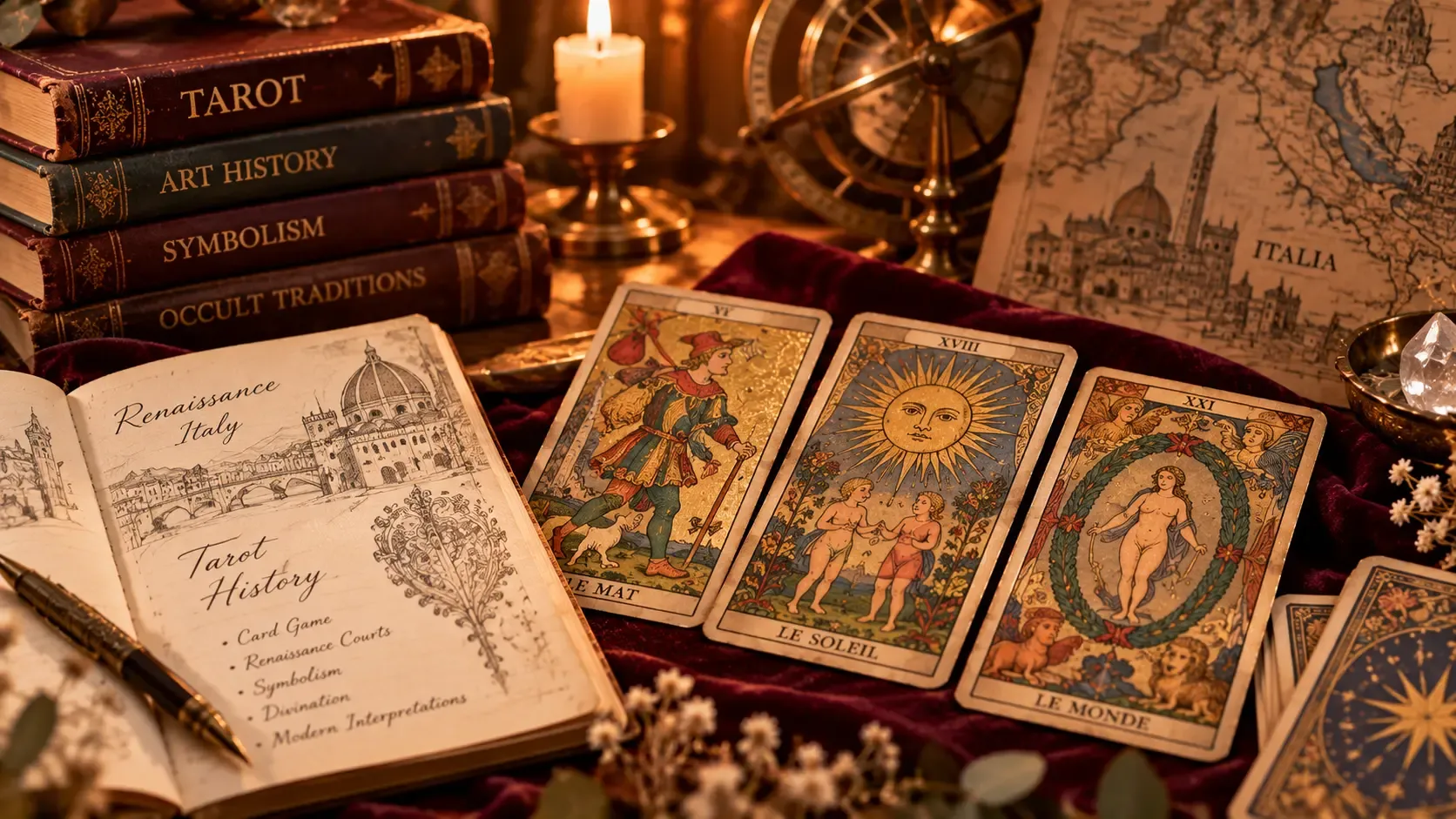
During the 15th century, tarot decks emerged in northern Italy. They were used to play a trick-taking card game, rather than primarily for spiritual readings.
According to the Victoria and Albert Museum’s history of tarot, early tarot decks were associated with entertainment in the courts of Renaissance Italy. Some surviving examples were beautifully hand-painted and decorated with gold.
Think about that for a moment.
The cards we might now use to reflect on love, work, or personal growth were once part of a game played centuries ago.
The Metropolitan Museum of Art also describes the early structure of tarot as an ordinary playing-card deck with an additional group of illustrated trump cards.
That means tarot did not begin in the form we commonly recognize today. Its role and interpretation evolved over time.
I find that especially interesting because it reminds me that the meaning we associate with an object can change as people find new ways to understand it.
How Did Tarot Become Associated with Fortune-Telling?
This was the part of my research that surprised me most.
If tarot began as a card game, how did it become connected with divination?
The change developed centuries later.
During the late 18th century, writers and occult thinkers in France began giving tarot cards new interpretations. They connected the imagery with ideas about hidden knowledge, ancient wisdom, and spiritual symbolism.
The Morgan Library & Museum’s research on occult tarot describes how the cards acquired a new identity during this period.
One influential figure was Antoine Court de Gébelin, who argued that tarot contained ancient Egyptian wisdom. Those historical claims helped shape how people came to view the cards.
But there is an important distinction here: the idea that tarot preserves an ancient Egyptian system is a historical theory, not an established fact.
The museum records do not support the popular story that tarot originated in ancient Egypt and passed unchanged through the centuries.
Instead, the evidence points toward tarot’s documented development in Renaissance-era Europe, followed by later spiritual and divinatory interpretations.
I think this is worth understanding because tarot’s actual history is fascinating without needing to turn every mystery into a proven ancient secret.
Sometimes, separating fact from legend makes a subject even more interesting.
The 78 Cards We Know Today Have Their Own Story
If you have ever looked through a tarot deck, you may have noticed that it usually contains 78 cards.
These are divided into two groups: the Major Arcana and the Minor Arcana.
The Major Arcana: The Bigger Themes
The Major Arcana contains 22 cards, including The Fool, The Magician, The Lovers, The Tower, and The World.
These cards are often interpreted through broad themes such as choices, change, identity, challenges, and completion.
For example, The Tower is commonly associated with disruption or the collapse of an unstable foundation. The Star is often interpreted through hope, renewal, and healing.
These are symbolic interpretations used by tarot readers, rather than scientifically established predictions.
The Minor Arcana: The Details of Everyday Life
The remaining 56 cards are divided into four suits:
- Cups: Often associated with emotions, relationships, and connections.
- Swords: Commonly linked with thoughts, communication, and difficult decisions.
- Wands: Often interpreted through creativity, ambition, and action.
- Pentacles: Commonly connected with practical matters, work, resources, and material life.
These associations are especially familiar in modern tarot reading.
What I find useful about this structure is that it gives a reading different levels to explore. One card might invite you to think about a major turning point, while another might draw your attention to an everyday decision or relationship pattern.
You don’t need to memorize every meaning immediately. Understanding the structure is a good place to begin.
The Artist Who Helped Shape Modern Tarot
While researching tarot, I also came across the story of Pamela Colman Smith.
If you’ve ever used a widely recognized Rider–Waite–Smith-style tarot deck, you may already know her work without knowing her name.
Smith was the artist who illustrated the deck associated with Arthur Edward Waite in the early 20th century.
According to the Morgan Library & Museum’s research on Pamela Colman Smith, Waite commissioned her to illustrate the deck in 1909.
Her illustrations helped make the cards visually rich and approachable. Instead of relying only on simple suit symbols for the numbered Minor Arcana cards, the images tell little stories through people, landscapes, gestures, and objects.
That visual storytelling matters.
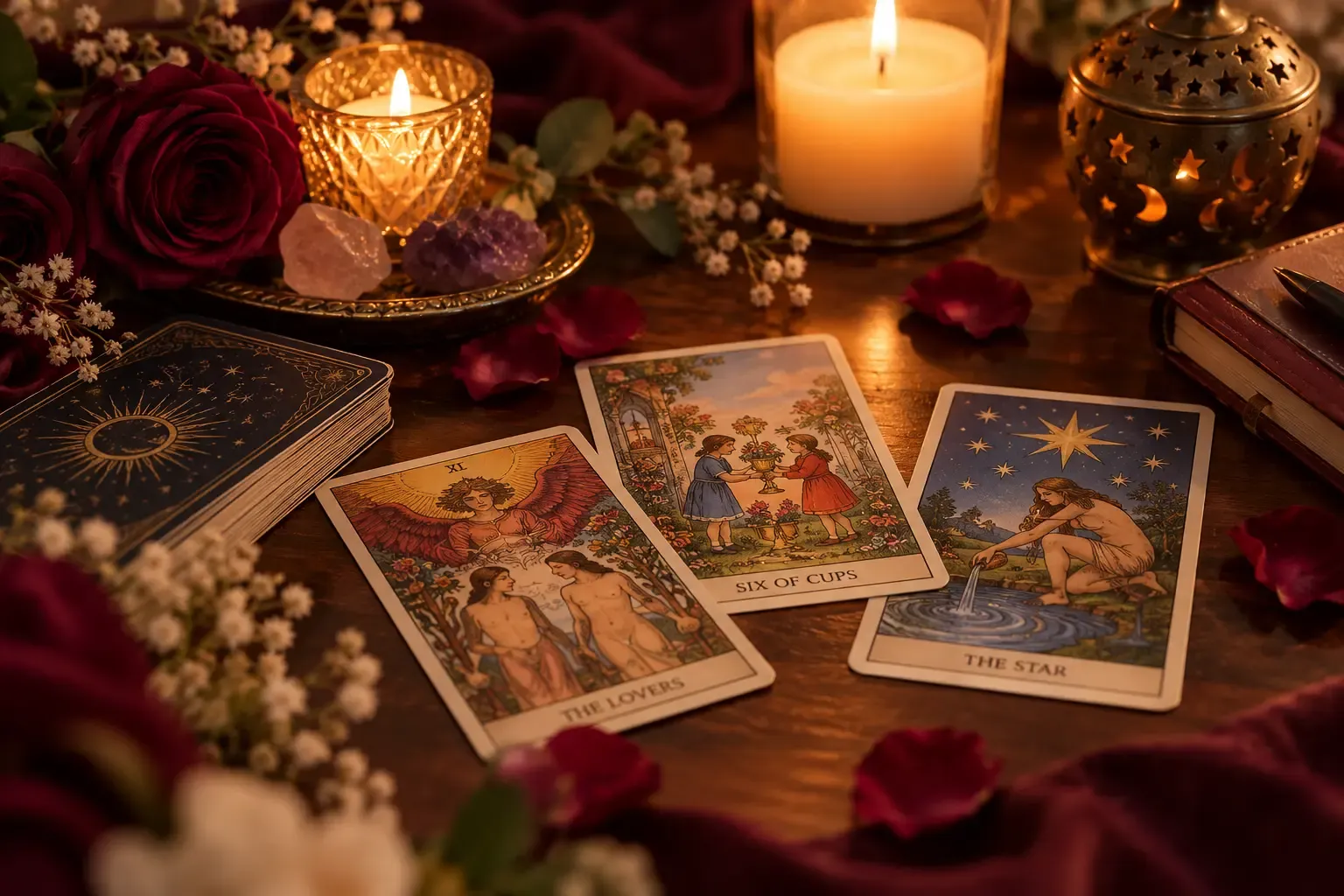
Look at the Six of Cups, for example. Its imagery can invite reflection on memories, childhood, generosity, and nostalgia.
Look at The Hermit. A solitary figure holding a lantern can suggest introspection, patience, or the search for understanding.
The artwork gives readers something to observe before they even open a guidebook.
I also think Smith deserves more recognition in conversations about tarot. Her contribution was not simply decorative. Her illustrations became a lasting part of how many people learn, experience, and interpret tarot today.
So, Do Tarot Cards Actually Predict the Future?
After learning more about tarot’s history, I think this question deserves an honest answer.
People approach tarot in different ways. Some view it as a spiritual practice, some use it for divination, and others treat it as a tool for self-reflection.
However, historical evidence about how tarot developed does not establish that the cards can reliably predict future events.
That doesn’t mean a tarot reading cannot feel meaningful.
Consider a simple example.
Suppose you draw The Hermit while feeling confused about your career. You might use its imagery to ask whether you need time away from other people’s opinions, whether you’ve been ignoring your own priorities, or whether you would benefit from considering your options more carefully.
The card hasn’t proved what will happen to your career. But it may have helped you ask a question you hadn’t considered before.
Similarly, drawing The Lovers doesn’t confirm that someone is your destined partner, and drawing The Tower doesn’t mean something terrible is about to happen.
The value of a reading may lie in the reflection, conversation, or perspective it creates.
For me, this is a more thoughtful way to approach tarot: remain curious about the symbolism, respect the personal meaning people find in it, and stay grounded when making important decisions.
A Little Experiment: Look at a Tarot Card Without Reading Its Meaning
I’d like to invite you to try something the next time you sit down with a tarot deck.
Choose one card, but don’t immediately look up its meaning.
Instead, spend a minute observing it.
Ask yourself:
What do I notice first?
Maybe it’s a person’s expression, an unusual object, a colour, or something happening in the background.
What feelings does the image bring up?
Does it feel peaceful, confusing, hopeful, lonely, or uncomfortable? There is no need to force a particular emotion.
How might this image relate to something I’m experiencing?
Perhaps it reminds you of a decision you’ve been postponing or a situation you need to see from a different angle.
Once you’ve explored your own impressions, read a traditional interpretation of the card and compare the two.
You may discover connections you hadn’t noticed at first.
Your personal interpretation won’t replace the deck’s established symbolism, but comparing the two can be a useful way to develop your understanding of tarot.
And most importantly, you don’t need to get the answer right.
The exercise is about paying attention.
What My Research Changed About the Way I See Tarot
When I began exploring tarot’s history, I expected to find a collection of old beliefs and mysterious stories.
Instead, I found a much more layered history: a card game in Renaissance Italy, centuries of changing interpretations, the rise of occult traditions in Europe, and artists whose work continues to shape tarot today.
The history also reminded me to be careful about the claims we make.
Not every popular story about tarot is historically established. Not every card predicts an event. And not every reading needs to provide a definite answer.
I still think tarot’s imagery is beautiful, its symbolism is rich, and the experience of sitting quietly with a question can be valuable.
But I appreciate it even more when I understand the difference between its documented history, its spiritual interpretations, and the personal meaning someone finds in a reading.
Perhaps that is one of the most interesting things about tarot: it has changed over time, and people continue to find new ways to connect with it.
Let’s Explore Tarot Together
At Tarot by Nishee, I believe a reading can be an invitation to slow down, reflect, and explore the questions that matter to you.
You might be thinking about a relationship, searching for clarity about a decision, or simply curious about what a particular card represents.
You don’t need to know everything about tarot before you begin.
Start with a question. Stay curious. Give yourself space to think.
And remember that the cards can be a starting point for reflection, while the choices you make remain your own.
Curious to explore? Visit Tarot by Nishee to learn more about our readings, or try the Free Tarot Draw for a moment of reflection and inspiration.
Sources and further reading
This article draws on historical information from the following museum resources:
- Victoria and Albert Museum — A History of Tarot Cards
- The Metropolitan Museum of Art — Before Fortune-Telling: The History and Structure of Tarot Cards
- The Morgan Library & Museum — Occult Tarot
- The Morgan Library & Museum — Pamela Colman Smith
Tarot interpretations vary among traditions and readers. This article distinguishes documented historical information from spiritual beliefs and modern interpretations.
SEO details
SEO title: Tarot History: The Surprising Truth About Tarot Cards
Meta description: Discover the real history of tarot cards, from Renaissance Italy to modern readings, and learn how tarot evolved from a card game into a tool for divination and reflection.
Suggested URL slug: history-of-tarot-cards
Primary keyword: history of tarot cards
Related keywords: where tarot cards originated, tarot cards history, how tarot cards work, tarot card meanings, Rider-Waite-Smith tarot history
Suggested tags: Tarot History, Tarot for Beginners, Tarot Card Meanings, Major Arcana, Tarot Research, Spiritual Growth